
When a tower portfolio comes to market, the first folder anyone opens in the data room is the ground leases. Steel and tenants matter, but the value of a site rests on the right to keep it where it stands. A lease with decades left to run, sensible escalations and clean renewal rights trades at a different multiple than a short term with a landlord who can walk away. The lease is the asset. It is also the hardest document in the room.
How Ground Lease Review Is Done Today
A team of analysts spends weeks reading PDFs and retyping terms into a spreadsheet. The folder is never clean. Leases signed decades ago arrive as scans, some with handwritten notes nobody can read. Annexes are missing. The original lease, the renewal, and a side letter nobody indexed disagree on the rent, and the amendment quietly overrides the clause you just read. The portfolio runs to hundreds of sites, and the closing date does not move.
Where it breaks is the retyping. The rent that lands in the valuation model is whatever the analyst typed, and the amendment that changed it sits in another file. The spreadsheet starts going stale the day it is finished.
How MYX Analyzer Does It
Drop a lease. Get the data. You define the fields you care about, such as rent, term, and escalation. MYX Analyzer reads the documents and fills a structured table with 1 row per lease. Each document is processed in minutes instead of hours, and a portfolio review shrinks from weeks to a couple of days.
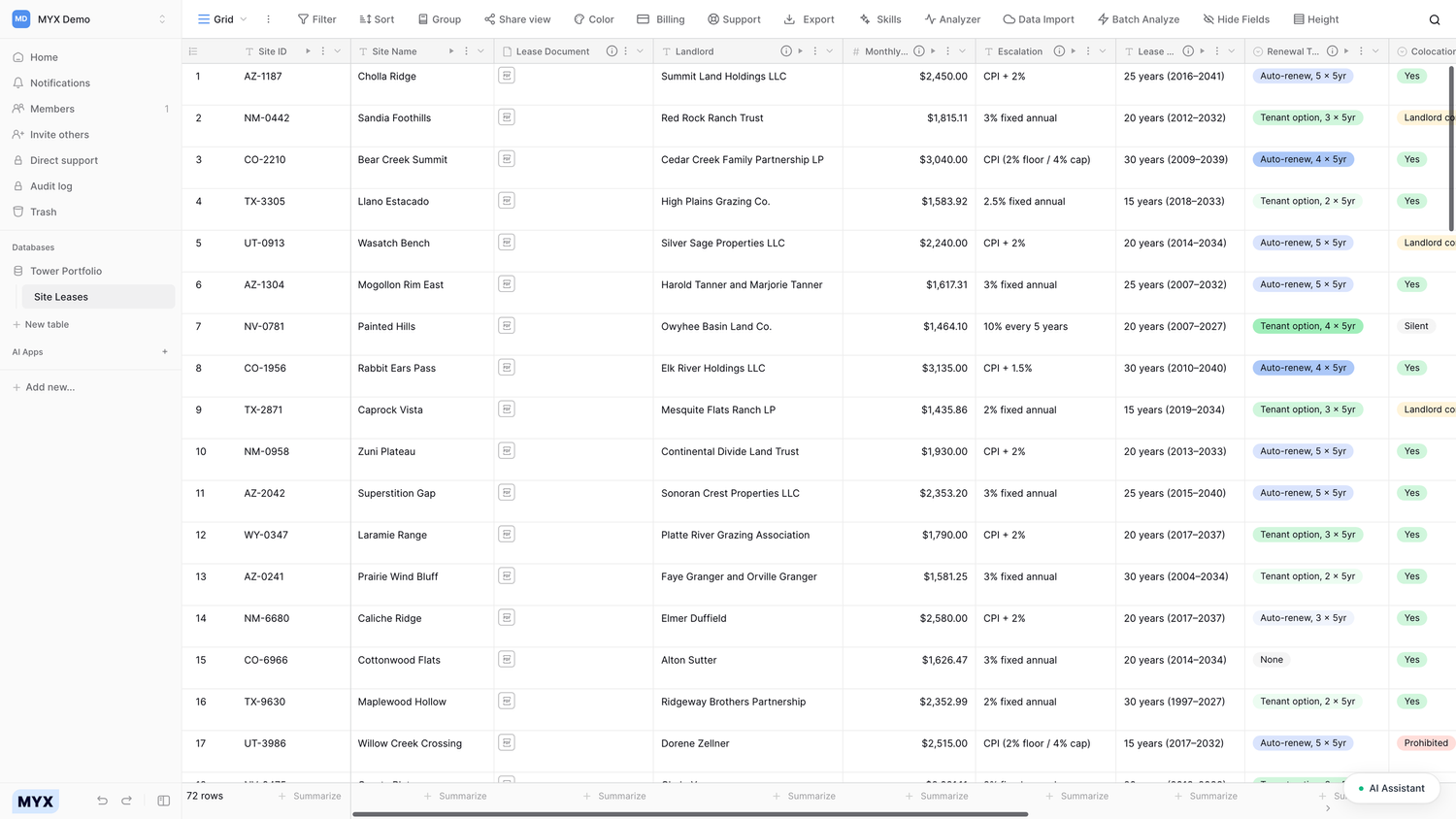
Review happens in a spreadsheet-style grid. Each value carries a confidence indicator, high, medium, or low, so a reviewer knows where to look first. Each value also carries a reference to the source page or section, so a reviewer can check any number against the source. When a value looks wrong, you rerun that cell, that row, or the whole column. When a question changes, you add a column and rerun it. Batch runs show a cost estimate before you submit. The finished table exports to Excel.
What a Ground Lease Abstraction Must Capture
Fields differ by portfolio and by buyer, but every ground lease abstraction needs the same core.
Rent: amount, currency, and payment frequency.
Term: commencement, expiry, and the term left at closing.
Escalation: fixed, index-linked, or stepped, and when each increase applies.
Renewal: how many options, how long each runs, and who holds them.
Termination: who can terminate, on what notice, and for what reasons.
Assignment and colocation: whether the operator can assign the lease or add tenants, and whether the landlord must consent.
Our January video counts 200+ fields extracted and clarified by the platform for ground leases, and MYX Analyzer reads documents in 20+ languages, so this list is a floor, not a ceiling.
See It on Your Own Leases
We published 3 videos on LinkedIn over the past few weeks. The first shows why ground leases are the painful first stop in every transaction and how MYX Analyzer reads them. The second goes from unstructured files to structured tables with the Prompt Assistant. The third takes the Analyzer onto construction documents: land leases, access agreements, oversail rights, wayleaves, and permits. Different documents, same shape of problem: the answers exist, but they are buried in files nobody has time to read.
Run the free demo on one of your leases: upload one lease with its amendments and annexes, get 40 structured fields back. No signup, no card. Or schedule a demo for a guided run on your portfolio.